Hand Wraps
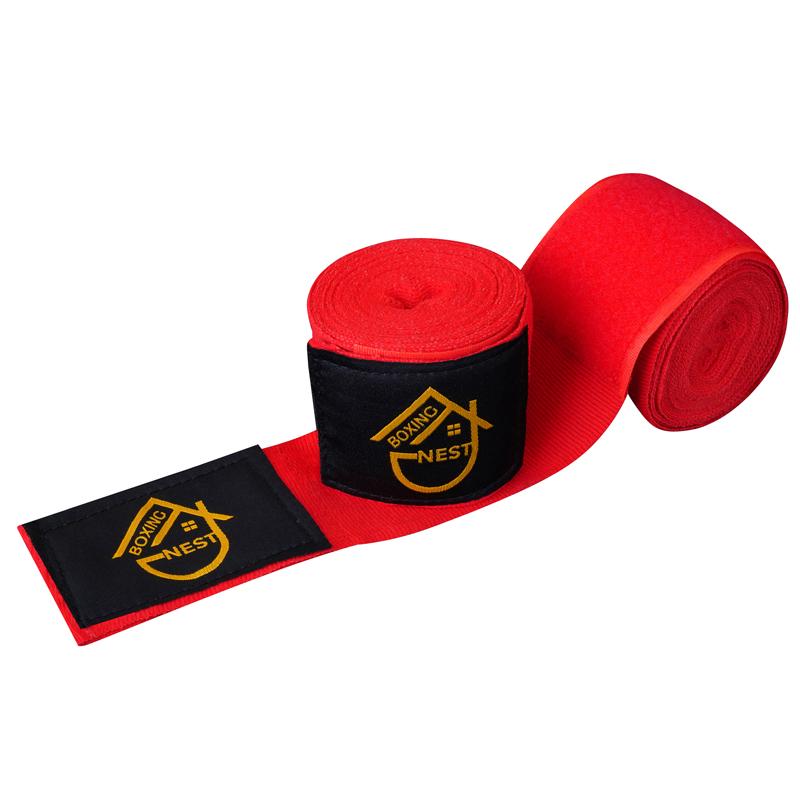
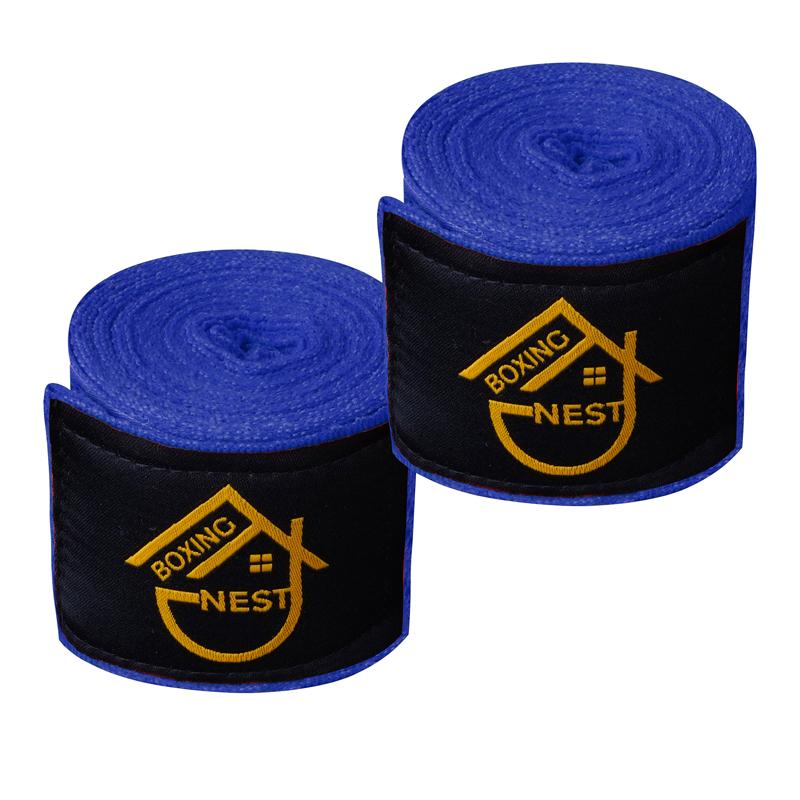
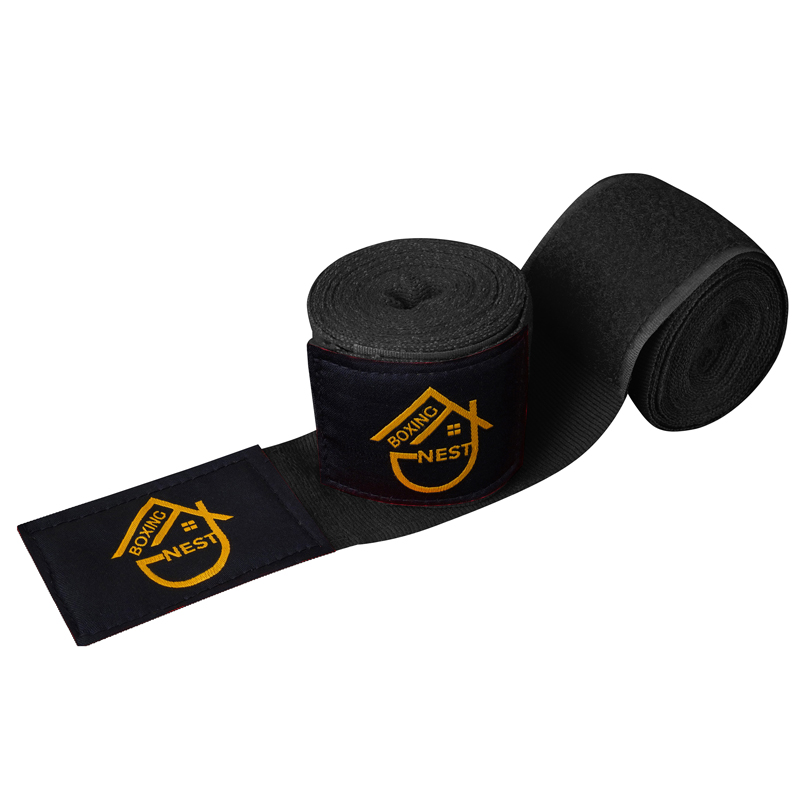
Product Specifications
| Specification | Details |
|---|---|
| Material | 100% cotton or elastic blend |
| Closure | Hook-and-loop velcro end |
| Thumb Loop | Yes — secure fit |
| Lengths | 120 inches (3m), 180 inches (4.5m) |
| Colors | Red, Black, Blue, White, Pink, Yellow, Green + custom |
| Washable | Yes — machine washable |
| MOQ (Custom) | 200 pairs minimum for custom label/branding |
| Origin | Sialkot, Pakistan |
Key Features
- Thumb loop for easy, consistent application
- Velcro closure keeps wraps secure during training
- Cotton wraps provide firm support and absorb sweat
- Elastic wraps offer compression and flexibility
- 180-inch length suitable for larger hands and wrists
- Machine washable — easy gym hygiene maintenance
- Available in custom colors for gym branding
- Excellent bulk pricing for gyms and distributors
How to Choose Your Hand Wraps
| Type | Best For | Length |
|---|---|---|
| Cotton | Traditional wrapping, firm support | 180 inches recommended |
| Elastic/Stretch | Quick wrap, compression feeling | 120 or 180 inches |
| Gel Inner Gloves | Fast put-on, beginner-friendly | One size fits most |
About Hand Wraps — The Most Important Protection in Boxing
Hand wraps are frequently described as the most important piece of protective equipment in boxing — more critical, in some respects, than the gloves themselves. This claim is grounded in anatomy. The human hand contains 27 bones, 29 joints, and over 100 ligaments and tendons. When a boxers throws a punch, these structures are compressed and stressed by the impact forces transmitted through the glove. Without proper hand wrapping, this stress is concentrated in the metacarpal bones, the wrist joint, and the small bones of the thumb — the areas most vulnerable to injury from boxing-specific impact patterns.
A properly applied hand wrap does four things simultaneously: it binds the metacarpal bones together so they function as a single impact-absorbing unit rather than as individually stressed elements; it stabilises the wrist joint against hyperextension by providing circumferential compression; it protects the knuckle skin from abrasion inside the glove; and it absorbs training sweat before it reaches the glove interior, extending the glove's functional lifespan. No other single piece of boxing equipment performs as many protective functions simultaneously.
Our hand wraps are manufactured in Sialkot, Pakistan, from raw material specifications that have been developed over years of feedback from professional training environments. The cotton wraps use a tightly woven fabric that provides firm compression without restricting blood circulation when applied correctly. The elastic/stretch wraps use a cotton-elastic blend that provides a more forgiving wrap with natural compression that accommodates the hand's changing dimensions as it clenches and unclenches during training. Both types include a thumb loop for consistent positioning from the start of wrapping, and a hook-and-loop velcro closure at the end for secure fastening without slipping during training.
Cotton vs Elastic — Full Comparison
The choice between cotton and elastic hand wraps depends on training preference, hand size, and the specific activities the athlete engages in. Both types provide adequate protection when applied correctly; the differences are in feel and behaviour during training rather than fundamental protection capability.
| Property | Cotton Hand Wraps | Elastic / Stretch Wraps |
|---|---|---|
| Compression | Fixed — stays where wrapped | Dynamic — adjusts to hand movement |
| Wrist support | Firmer, more rigid | Slightly less rigid but still supportive |
| Preferred by | Professional and serious amateur boxers | Beginners, MMA athletes, fitness boxers |
| Length for most adults | 180 inches recommended | 120 or 180 inches |
| Drying time | Longer — denser weave retains moisture | Faster — open weave dries quicker |
| Price | Slightly lower | Slightly higher |
| Feel preference | Traditional boxing feel | More comfortable for some athletes |
How to Wrap Your Hands — Step by Step
Correct hand wrapping technique takes practice but is essential for maximising protection. An incorrectly applied wrap — too tight, too loose, or with the layers crossing in the wrong positions — provides less protection than no wrap at all in some cases.
- Step 1: Place your thumb through the loop with your fingers spread wide. The wrap should unroll from underneath across the back of your hand.
- Step 2: Wrap around the wrist 2–3 times, working from the wrist toward the hand. Keep each layer flat against the skin without overlapping at an angle.
- Step 3: Bring the wrap across the back of the hand and between the pinky and ring fingers, around the front of the hand, then back up through the gap and across the back again to the opposite side. Repeat for the ring-middle and middle-index finger gaps.
- Step 4: Wrap 2–3 times around the knuckles with the hand in a relaxed fist. The wrap should cover the knuckle skin without extending onto the first finger joints.
- Step 5: Cross the wrap diagonally across the back of the hand back to the wrist. Use the remaining length to make additional wrist wraps, ensuring the wrist is fully covered to just below the glove cuff line.
- Step 6: Secure the velcro closure firmly. Close your hand into a fist — the wrap should feel snug but not cause numbness or tingling in the fingers. If numbness occurs, remove and re-wrap with slightly less tension.
Who Uses Hand Wraps?
- Boxers at all levels: Every level of boxer from first-day beginners to professional champions wraps their hands before glove use. It is the non-negotiable first step of every boxing training session.
- Muay Thai practitioners: Muay Thai training that includes boxing gloves requires the same wrist and knuckle protection as boxing. Proper wrapping is equally important in Muay Thai.
- MMA fighters: MMA training sessions that include striking with MMA or boxing gloves require hand wraps. Most MMA fighters use elastic wraps for the flexibility they offer during grappling-integrated sessions.
- Kickboxers: Kickboxing training combines punching with kicking techniques. The striking volume in kickboxing training is similar to boxing, requiring the same level of hand protection.
- Fitness boxing participants: Fitness boxing classes and workouts are among the fastest-growing fitness formats globally. Participants who use boxing gloves require hand wraps for safety — this makes hand wraps an extremely high-volume item for fitness studios and boxing fitness programmes.
- Gyms and fitness studios: Commercial gyms that run boxing fitness classes and provide gloves to members typically also supply or sell hand wraps, as they are a consumable item that individual members replace regularly.
Gel Inner Gloves — The Alternative to Traditional Wraps
Gel inner gloves — also known as quick wraps — represent an alternative to traditional hand wraps for athletes who find the wrapping process time-consuming or technically challenging. Gel inners are pre-shaped gloves with integrated gel padding over the knuckle area that slide on in seconds without the wrapping process. They provide knuckle protection and partial wrist support but do not replicate the precise metacarpal binding and full wrist stabilisation of a correctly applied traditional wrap.
For beginners still learning correct wrapping technique, gel inners provide adequate protection for initial training sessions while the wrapping skill develops. For experienced athletes, gel inners are a convenient alternative for light technique sessions where maximum protection is not the priority. For sparring and heavy training sessions, traditional wraps remain the recommended choice for maximum protection.
Care & Maintenance
- Machine wash after every use: Hand wraps absorb significant amounts of sweat during training and must be washed regularly. Fortunately, both cotton and elastic wraps are machine-washable. Use a mesh laundry bag to prevent the wraps from tangling around other items in the wash.
- Cold water wash only: Hot water causes cotton to shrink slightly and can weaken elastic fibres over time. Always wash at 30°C or below with a gentle detergent.
- Do not tumble dry: Tumble drying causes shrinkage in cotton wraps and can damage the velcro closure. Hang-dry or lay flat to dry. Wraps dry quickly due to their thin profile.
- Roll neatly after drying: Rolling wraps neatly after drying prevents tangling and maintains the wrap's structure for the next application session. Many athletes roll from the velcro end back to the thumb loop for ease of application.
- Replace when elastic loses tension: Elastic wraps lose compression effectiveness as the elastic fibres fatigue over time. When a wrap no longer provides noticeable compression during training, replace it.
- Inspect velcro regularly: The velcro closure deteriorates with use and washing. If the velcro no longer holds reliably during training, the wrap should be replaced — a wrap that comes loose during a session provides no protection.
Frequently Asked Questions
What length hand wraps should I buy?
For most adult hands, 180-inch (4.5m) wraps are recommended. They provide enough length to cover the wrist thoroughly, make multiple passes through the fingers, wrap the knuckles adequately, and make additional wrist passes with enough material to secure the velcro. 120-inch (3m) wraps are suitable for athletes with smaller hands, children, and for light training sessions where full professional wrapping technique is not used. When in doubt, choose 180 inches — having extra material is always preferable to running short mid-wrap.
How often should hand wraps be replaced?
Cotton hand wraps used regularly (3–4 times per week) and washed after every session typically last 6–12 months before the fabric thins, the velcro weakens, or the thumb loop stretches enough to affect application. Elastic wraps may need replacement sooner — every 4–8 months — as the elastic fibres lose tension. Many serious athletes maintain 2–3 pairs rotating so they always have a clean, dry pair available.
Do I need hand wraps if I have gel inner gloves?
Gel inners provide knuckle protection and basic support but do not provide the full metacarpal binding and wrist stabilisation of traditional wraps. For light training and beginner sessions, gel inners are adequate. For sparring, heavy bag work, and high-intensity training, traditional wraps are strongly recommended. Many athletes use gel inners for quick warm-up sessions and traditional wraps for main training.
What is the minimum bulk order quantity?
Hand wraps are our most popular bulk order item. There is no minimum for standard pricing. Volume discounts begin at 100 pairs and scale at 200, 500, and 1000+ pair quantities. Custom-labeled hand wraps (with your gym or brand name on the velcro closure or thumb loop area) require a minimum of 200 pairs. Contact us for current bulk pricing tiers — hand wraps offer excellent margins for resale in gyms and boxing stores.
Can you supply hand wraps in custom colors for our gym team?
Yes. We can produce hand wraps in custom colors for gym team branding. Custom colors are available for orders of 200+ pairs. Popular team combinations include matching the gym's brand colors across wraps, gloves, and gym bags. Contact us with your color specifications (Pantone codes or color samples) and quantity, and we will provide a complete production quote.
Hand Wraps in the Global Boxing Supply Chain
Hand wraps are the highest-volume consumable item in the boxing supply chain. Every boxer at every level needs multiple pairs — one pair is insufficient because wraps need to air dry between sessions, and serious athletes who train daily need at least 3–4 pairs rotating. A boxing gym with 50 active members selling or supplying wraps processes hundreds of pairs per year. This volume makes hand wraps the most important product for gyms interested in equipment resale revenue and the most cost-sensitive item for gym operators managing equipment budgets.
Sialkot is the world's largest producer of boxing hand wraps, and Boxing Nest leverages our location in this ecosystem to offer pricing and quality that is difficult to match through other sourcing channels. Our cotton and elastic wraps are produced from fabric stock sourced from Pakistani textile mills — a mature, high-quality domestic textile industry that provides consistent raw material quality. The wrap construction (thumb loop placement, velcro specification, edge finishing) follows specifications developed in response to professional trainer feedback over years of supply to commercial gym clients.
Hand Wrap Specifications for Distributors and Retailers
For distributors and boxing equipment retailers considering stocking Boxing Nest hand wraps, the following technical and commercial specifications are relevant for product listing and buying decisions:
- Cotton wraps: 100% cotton woven fabric. Standard widths 5cm. Lengths: 120 inches (3.05m) and 180 inches (4.57m). Thumb loop: cotton reinforced. Closure: 5cm hook-and-loop velcro. Machine wash 30°C. Available in standard stock colors: Red, Black, Blue, White, Pink, Yellow, Green.
- Elastic/stretch wraps: Cotton-elastic blend (typically 85% cotton, 15% elastic). Same widths and lengths as cotton. Slightly higher thickness than cotton due to elastic integration. Machine wash 30°C (gentle cycle recommended).
- MOQ for custom label: 200 pairs per design. We print custom labels on the velcro closure tab, the thumb loop tag, or the wrap packaging.
- Retail packaging options: Individual poly bags, header card packaging for retail display, bulk compressed bale packaging for wholesale supply.
- Lead time: Standard stock wraps ship within 5–10 business days. Custom label production requires 3–4 weeks from artwork approval.
💬 Hand wraps are our most popular bulk item. Order 500+ pairs and get our best wholesale pricing with custom labeling.
Get Bulk QuoteHand Wrap Colour Selection for Team and Gym Identity
Hand wrap colour is one of the most visible elements of a boxer's training appearance, and for gyms building team identity, coordinated wrap colours create a powerful and immediate visual signal of team membership. Professional boxing teams, MMA fight camps, and competitive boxing clubs frequently maintain a single team colour for all athletes' wraps — visible in training footage, competition corner activity, and media content. When an athlete's wrap colour consistently appears alongside their gym's branding in published content, it reinforces brand recognition in a subtle but cumulatively effective way.
For gyms considering branded wrap colour programmes, Boxing Nest makes this straightforward. Our standard color range covers red, black, blue, white, pink, yellow, and green — colors that accommodate most gym brand palettes without requiring custom production. For gyms whose brand colors fall outside this range, our custom colour production minimum of 200 pairs is accessible for most established commercial gym operations. Contact us with your brand colour specifications (Pantone codes or hex values) and we will advise on the closest achievable match within our dyeing capabilities and provide a custom production quote.
The Hand Wrap as a Training Diagnostic Tool
Experienced boxing coaches observe the condition of an athlete's hand wraps as one of several diagnostic indicators of training quality and hand health. Wraps that show heavy sweat saturation but clean striking surfaces indicate the athlete is working at high intensity but not making solid contact — a technical issue. Wraps that show wear and tearing at the knuckle zone indicate the athlete is making consistent contact with proper alignment. Wraps that show wear at the wrist area may indicate the athlete is bearing excessive wrist flexion under impact — a technique issue that can cause chronic wrist injury if not addressed. For coaches who conduct regular wrap inspections as part of athlete monitoring, the condition of the wrap provides information about the training session that the athlete may not verbally report.