Punching Bags
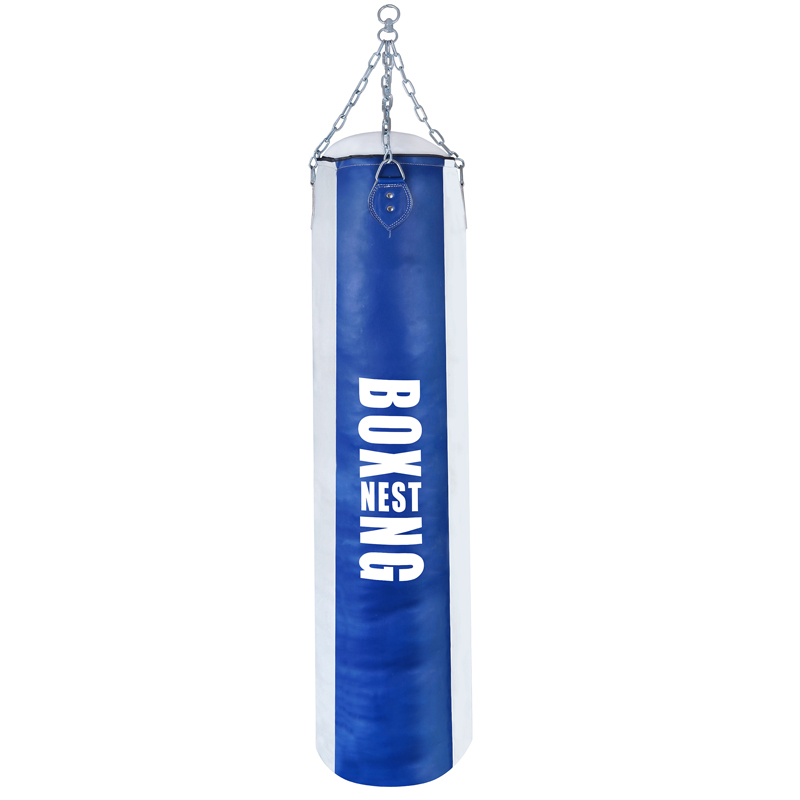
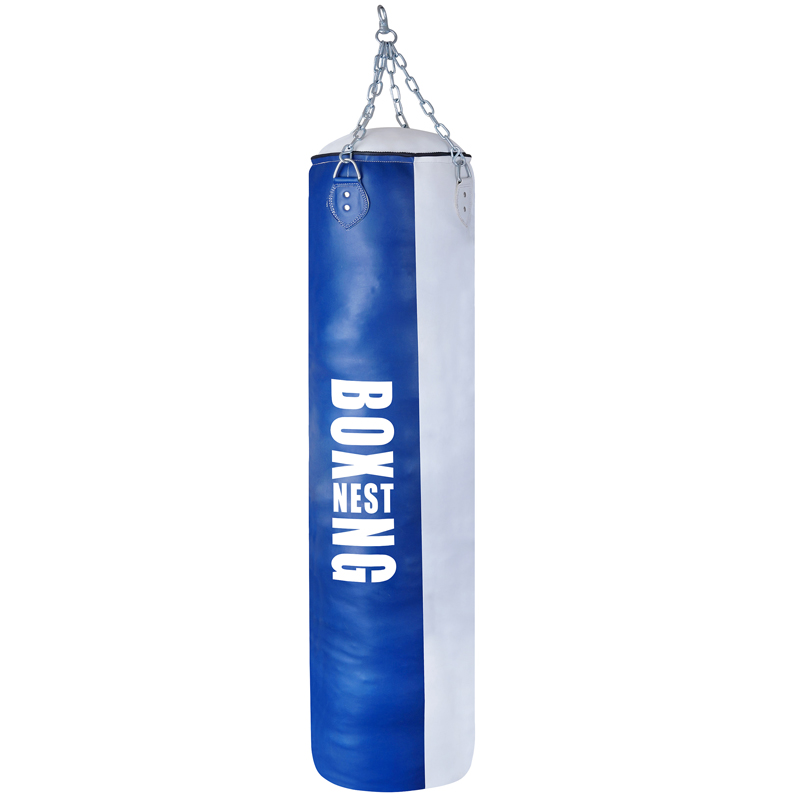
Product Specifications
| Specification | Details |
|---|---|
| Outer Material | Genuine leather or heavy-duty PU synthetic |
| Filling | Compressed textile / sand mix (unfilled available) |
| Stitching | Triple-stitched seams for maximum durability |
| Suspension | Heavy-duty D-ring and chain hardware |
| Weights | 25 kg, 40 kg, 60 kg, 80 kg + custom |
| Types | Heavy bag, angle bag, uppercut bag, Muay Thai bag |
| Filled / Unfilled | Both options available |
| Origin | Sialkot, Pakistan |
Key Features
- Genuine leather or heavy-duty PU outer shell
- Triple-stitched seams resist splitting under heavy impact
- Reinforced top ring and chain for secure gym mounting
- Dense filling provides consistent resistance
- Swivel hook compatible for smooth rotation
- Available unfilled for easy international shipping
- Custom sizes and shapes on request
- Suitable for boxing, Muay Thai, kickboxing and MMA
Punching Bag Type Guide
| Type | Best For | Ideal Weight |
|---|---|---|
| Heavy Bag | Power strikes, general boxing training | 40–60 kg |
| Angle Bag | Hooks, uppercuts, body shots | 40 kg |
| Uppercut Bag | Uppercut development, infighting | 25–40 kg |
| Muay Thai Bag | Kicks, knees, elbows, full striking | 60–80 kg |
About Our Punching Bags
A punching bag is the anchor piece of equipment in any boxing gym. Every other training tool — gloves, mitts, wraps, speed balls — supports and complements the bag, but it is the bag that absorbs the highest training volume and bears the most accumulated impact stress over the gym's lifetime. This means that bag quality is not a secondary consideration: a gym-grade punching bag must be engineered to withstand thousands of training sessions at full intensity without structural failure.
Our punching bags are manufactured in Sialkot, Pakistan, using construction standards developed specifically for professional gym environments. The outer shell options — genuine leather or heavy-duty PU synthetic — are both selected for their resistance to the abrasion, impact, and sweat exposure that characterises daily gym use. The stitching uses triple-stitched seams throughout, with the seam thread specification matched to the stress level at each seam location on the bag. The highest-stress seams — the top collar ring, the primary vertical seams, and the bottom closure — use heavier thread and more passes than the lower-stress panel joins.
The filling system is one of the most important and least visible aspects of punching bag quality. The filling determines the feel of the bag during training — the resistance, the rebound characteristics, and whether the filling shifts and settles unevenly over time. Our bags use a compressed textile filling that provides consistent density across the entire bag body. Unlike sand-based fills, which can compact into hard spots at the bottom of the bag over time, compressed textile maintains its distribution under sustained impact. We also offer unfilled bags for buyers who prefer to fill locally with their choice of material or who need unfilled bags for cost-effective international shipping.
The suspension hardware — the top D-ring, the chain, and the swivel assembly — is rated to bear the dynamic loads generated by striking a filled bag. A 60-kg bag struck with full force generates peak loads significantly higher than 60 kg at the suspension point due to momentum and deceleration forces. Our hardware is rated conservatively to ensure safety under sustained heavy use. The swivel attachment allows the bag to rotate freely without the chain twisting, which extends chain lifespan and reduces the noise generated by bag movement during training.
Choosing the Right Punching Bag
Heavy Bag (Standard Cylinder)
The standard cylindrical heavy bag is the most versatile bag type and the correct first purchase for any boxing gym. Its consistent cylindrical profile allows training of all punch types — jabs, crosses, hooks, uppercuts — at any height position along the bag. A 40–50 kg heavy bag is appropriate for most adult athletes for general boxing training. Heavier bags (60–80 kg) are preferred by heavyweight fighters and by fighters who want a bag that swings less — a heavier bag absorbs the punch energy rather than swinging away, requiring the fighter to follow the bag and reset, which develops specific attributes that a static bag does not.
Angle Bag (Angled Top)
The angle bag features a raised, angled top section that mimics the shoulder and head profile of an opponent. This design creates specific target areas for hooks to the body and head that the cylindrical heavy bag does not replicate well. Body shots — particularly left hooks and right uppercuts to the body — feel significantly more realistic on an angle bag than on a standard heavy bag. For fighters who work body punching as a core component of their offence, the angle bag is a valuable specialist tool that complements rather than replaces the standard heavy bag.
Uppercut Bag (Horizontal or Mounted)
Uppercut bags are mounted horizontally at a height that allows the fighter to throw realistic uppercut angles — the same angle used when throwing uppercuts at an opponent's chin during inside fighting. On a standard heavy bag, uppercut training requires working the bottom of the bag at an anatomically awkward angle that does not replicate the actual uppercut movement correctly. The uppercut bag resolves this by providing a target at the correct height and angle. It is an essential specialist bag for fighters who want to develop their inside game.
Muay Thai Bag (Long Heavy Bag)
The Muay Thai bag is a longer version of the standard heavy bag, typically extending 150–180 cm in length rather than the standard 90–120 cm. The additional length accommodates the low kicks — round kicks to the thigh, teep kicks to the body, and knees — that are central to Muay Thai technique but which cannot be practiced effectively on a standard-length heavy bag that does not extend below hip height. For any gym that trains Muay Thai or kickboxing, the Muay Thai bag is the appropriate primary bag rather than the standard boxing heavy bag.
Who Needs Punching Bags?
- Boxing gyms: The primary training facility for every boxer. A commercial boxing gym typically requires 8–20 bags depending on class sizes and the number of training stations.
- MMA and Muay Thai gyms: Gyms that train combat sports athletes need a mix of bag types — standard heavy bags for boxing rounds, Muay Thai bags for kicking and knee development, angle bags for body shot training, and uppercut bags for inside fighting development.
- Fitness studios and CrossFit boxes: Boxing fitness classes that include heavy bag rounds are among the most popular group fitness formats globally. Studios offering this format need bags that are safe, durable, and visually appealing.
- Home gyms: Individual athletes who train at home need a single bag that handles their training needs. A 40 kg standard heavy bag is the most practical choice for a home gym setup in terms of space and versatility.
- Hotels and corporate wellness facilities: Upscale hotels and corporate wellness centres that include boxing equipment in their fitness facilities need bags that are visually high-quality and appropriate for the aesthetic of a premium environment.
Installation and Setup
Punching bags must be installed securely to avoid injury from bag failure and to protect the structural integrity of the mounting surface. Key installation considerations:
- Ceiling mounting: The mounting point must be structural — attached to a ceiling beam or joist capable of bearing the dynamic loads generated by bag striking. Do not mount to drywall alone. A 60 kg bag can generate peak loads of 200+ kg at the suspension point during heavy striking. Use appropriate anchor hardware rated for dynamic loads.
- Clearance: Allow at least 0.5m clearance in all directions around a standard heavy bag when hanging at training position. A swinging bag moves in arcs and requires space to move without striking nearby equipment or athletes.
- Chain and swivel: Inspect the chain and swivel assembly on receipt and periodically during service. Replace the swivel if rotation becomes rough or if any chain link shows deformation. A failing swivel or chain is a safety hazard.
- Platform/freestanding options: For environments where ceiling mounting is not possible, heavy bag platforms or free-standing bag holders are available. Contact us for availability and current pricing on stand options for our bag sizes.
Care & Maintenance
- Wipe down after every session: Remove sweat from the bag surface after each training session. Sweat degrades both leather and synthetic surfaces over time, particularly at the seam lines.
- Condition leather bags monthly: Apply leather conditioner to the full surface of genuine leather bags monthly to maintain suppleness and prevent surface cracking. Pay particular attention to seam lines and the top collar area.
- Inspect top ring and hardware quarterly: Check the D-ring, chain, and swivel for any wear, deformation, or loosening at attachment points. Hardware failure during training is a safety hazard. Replace any suspect hardware immediately.
- Check filling distribution: If the filling in a filled bag settles unevenly — typically detectable as a harder bottom section and softer middle — the bag can be unhooked and repositioned periodically by hanging it inverted to allow the fill to redistribute. This is more relevant in older bags and in hot, humid environments.
- Store indoors: Punching bags exposed to outdoor conditions — UV radiation, rain, temperature extremes — deteriorate significantly faster than bags stored indoors. Always store bags in covered, temperature-stable environments.
Frequently Asked Questions
Should I buy a filled or unfilled bag?
For most buyers, a pre-filled bag is the most convenient option — it arrives ready to hang and train on without additional setup. Unfilled bags are beneficial for international shipping (significantly lower shipping weight and cost) and for buyers who want to control the fill material — using textile offcuts, rags, or sand for specific density preferences. If you are purchasing locally in Pakistan or in a country with reasonable shipping costs from Pakistan, a pre-filled bag is recommended. For buyers in regions where shipping weight costs are significant, an unfilled bag with local filling is worth considering.
What weight punching bag is best for a beginner?
For a beginner boxer or martial arts practitioner, a 40 kg standard heavy bag is the most appropriate starting point. It is heavy enough to not swing excessively during power strikes, light enough to hang safely in most domestic and commercial environments, and large enough for a full range of punching techniques. As the athlete develops power and technique, heavier bags (60 kg) can be added for specific training purposes.
How long does a punching bag last?
A quality punching bag in a commercial gym environment with daily use by multiple athletes should last 3–7 years with proper maintenance. The primary wear points are the outer shell surface (abrasion from glove contact), the top collar area (stress concentration from the chain), and the seams (accumulated fatigue from impact). Genuine leather bags generally last longer than PU synthetic bags under equivalent use, but PU bags require less maintenance and perform acceptably for most gym applications. The filling in pre-filled bags maintains its distribution for several years before any settling becomes noticeable.
Can I order custom size or shape bags?
Yes. We produce punching bags in custom dimensions, shapes, and filling densities for specific applications. Custom orders include specific height and diameter specifications, custom fill weight, non-standard colors, and custom embossed logos. Custom bag production requires a minimum order of 5 units and has a production lead time of 3–5 weeks. Contact us via WhatsApp with your specifications for a complete quote.
Do you supply the ceiling hardware and chain for installation?
Our bags are supplied with a top D-ring and chain for standard hanging configurations. We do not supply ceiling anchors, as the appropriate anchor type varies by ceiling construction type (concrete, wood beam, steel I-beam, etc.). We recommend consulting a local hardware supplier or installation professional for the ceiling anchor component. The chain supplied with the bag connects to a commercial-grade swivel hook that accepts standard ceiling mount hooks.
Punching Bag Filling Guide — What to Use
For buyers who purchase unfilled bags and fill them locally, the filling material significantly affects the bag's training characteristics. The three most commonly used fill materials each produce distinct training experiences:
- Compressed textile (rags/fabric offcuts): The most common professional fill. Compressed textile produces a dense, heavy bag with a moderate rebound. The material compresses slightly under impact, giving the bag a realistic body feel without the dead thud of sand. It can settle slightly over time, making the bottom denser than the top. To prevent this, periodically unhook the bag and hang it inverted for a few days to redistribute the fill. This is the fill type used in our pre-filled bags.
- Sand: Sand produces an extremely heavy, relatively dead bag with minimal rebound. Striking a sand-filled bag feels similar to hitting a solid object — more power-focused than technique-focused. Sand compacts heavily to the bottom over time, creating an imbalanced bag that is difficult to correct. Not recommended as the sole fill material; some practitioners mix sand with textile to achieve specific density characteristics.
- Shredded foam: Produces a lighter bag with more spring and rebound than textile fill. Easier on the hands and wrists, making it appropriate for beginners and for rehabilitation training where impact reduction is the priority. Does not compact significantly over time. Produces a less realistic striking feel than textile fill but is the best choice for injury-prevention training environments.
Punching Bags for Specific Training Goals
The punching bag is one of the most versatile training tools in boxing, but extracting maximum training value requires understanding how to use different bag types for specific development goals rather than simply hitting the bag without structure.
Power development: Use a heavier bag (60–80 kg) for power training. A heavier bag provides more resistance and less swing, requiring the athlete to drive through the bag rather than pushing it away. Combine with 3-minute rounds of maximum-power combinations with full recovery between rounds. Power training rounds on the bag should be performed fresh — not at the end of a training session when fatigue compromises technique and reduces the quality of power output.
Combination development: Use a bag of moderate weight (40–50 kg) for combination training. The bag's swing after each punch series requires the athlete to manage distance and time the next combination correctly — a dynamic that develops combination timing more effectively than hitting a stationary target. Focus on clean technique in each combination rather than maximum power, and vary the combination length from 2-punch to 8-punch sequences within each round.
Cardio conditioning: Use bag rounds (typically 3 minutes on, 1 minute off) as a cardiovascular conditioning tool. Higher-volume, continuous rounds at moderate intensity develop the aerobic base needed for extended fights. Vary the pace within rounds to include both explosive high-intensity bursts and sustained moderate-intensity output periods, replicating the variable intensity demands of actual competition.
💬 Setting up a boxing gym? We supply complete gym packages — bags, gloves, mitts and accessories at wholesale pricing.
Get Gym Package Quote